
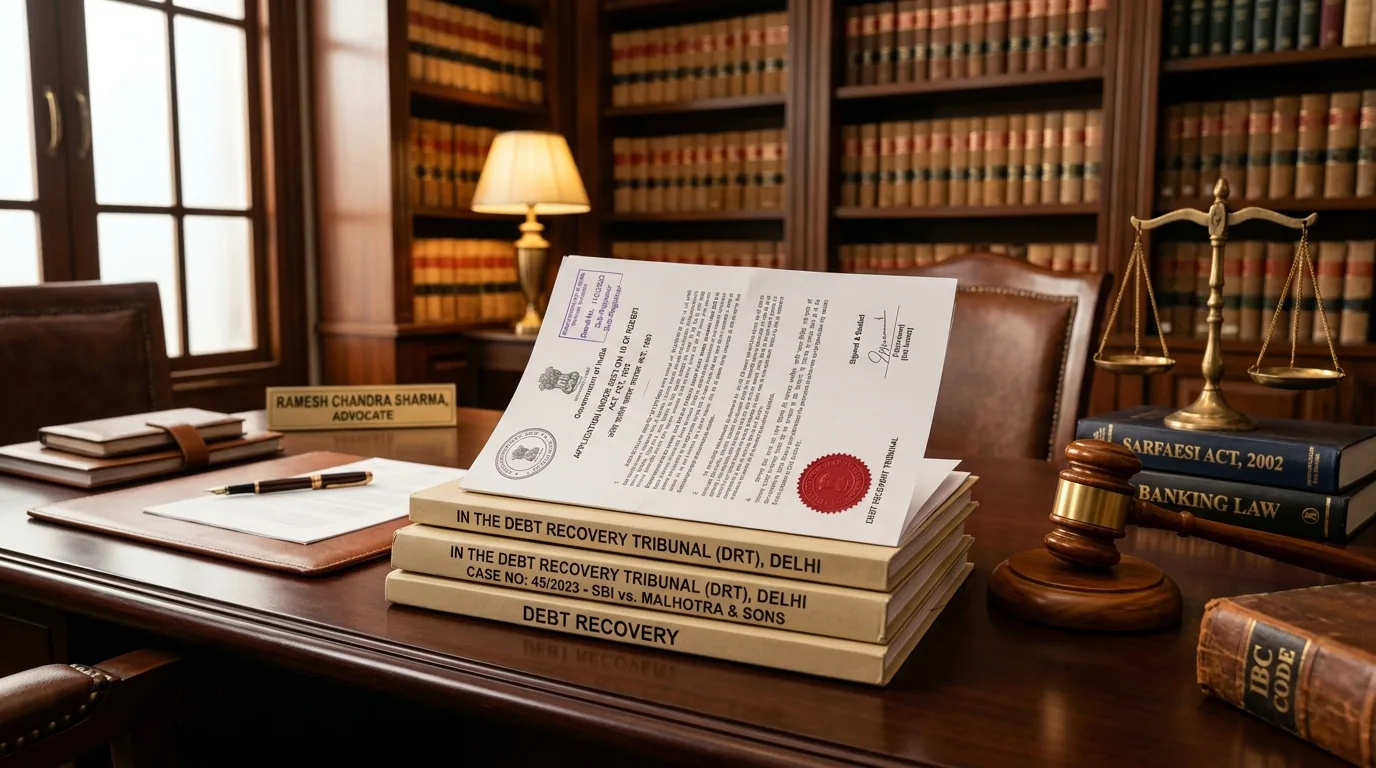
Bank loan default in India can lead to notices, recovery proceedings, enforcement of secured property and, in certain cases, proceedings before the Debt Recovery Tribunal. The action available depends on the type of loan, security provided, amount outstanding and applicable law.
What Happens When You Default on a Bank Loan?
When a borrower fails to pay loan instalments according to the agreed schedule, the bank may initially send reminders and demand payment. If the default continues, the loan account may be classified as a Non-Performing Asset (NPA) and formal recovery mechanisms may become applicable.
Can a Bank Send a Legal Notice?
Yes. A bank can issue a demand or legal notice when a borrower fails to repay the loan according to the agreed terms.
- Amount claimed by the bank
- Principal and interest outstanding
- Details of the loan account
- Details of the default
- Security provided for the loan
- Time allowed for repayment
- Proposed recovery action
What Is the SARFAESI Act?
The Securitization and Reconstruction of Financial Assets and Enforcement of Security Interest Act, 2002 provides an important mechanism for eligible secured creditors to enforce security interests.
- Section 13(2) demand notice
- 60-day period stated in qualifying demand notices
- Measures under Section 13(4), subject to statutory requirements
Can a Bank Auction the Borrower's Property?
Where property has been validly provided as security and applicable legal requirements have been satisfied, a bank may take possession of the secured asset and proceed towards its sale.
Can a Borrower Challenge SARFAESI Action?
Section 17 of the SARFAESI Act provides a remedy before the Debt Recovery Tribunal for a person aggrieved by measures taken under Section 13(4).
- Incorrect calculation of dues
- Defective notices
- Procedural irregularities
- Disputed security interests
- Improper possession or sale procedures
What Is the Debt Recovery Tribunal?
The Debt Recovery Tribunal is a specialized forum for recovery of debts owed to banks and financial institutions.
Can Recovery Agents Harass a Borrower?
Banks and recovery agents must comply with applicable RBI directions. Intimidation, threats, public humiliation and other unlawful methods are not permitted.
- Preserve messages and call records
- Keep communications relating to recovery
- Use the bank grievance mechanism where appropriate
Can a Borrower Be Arrested for Loan Default?
Ordinary failure to repay a loan is generally a civil debt-recovery matter and does not by itself mean that the borrower will be arrested. Separate criminal proceedings may arise where facts involve allegations such as fraud, forgery or cheating.
What Should You Do After Receiving a Recovery Notice?
A borrower should respond promptly and examine the legal and financial details contained in the notice.
- Read the notice carefully
- Collect loan documents
- Verify the outstanding amount
- Identify the type of proceeding
- Check the applicable deadline
- Obtain appropriate legal advice where necessary
Conclusion
Bank loan default in India can result in SARFAESI proceedings, DRT recovery proceedings and, in qualifying corporate cases, insolvency proceedings. Borrowers also have legal and procedural rights and should not ignore recovery notices.